

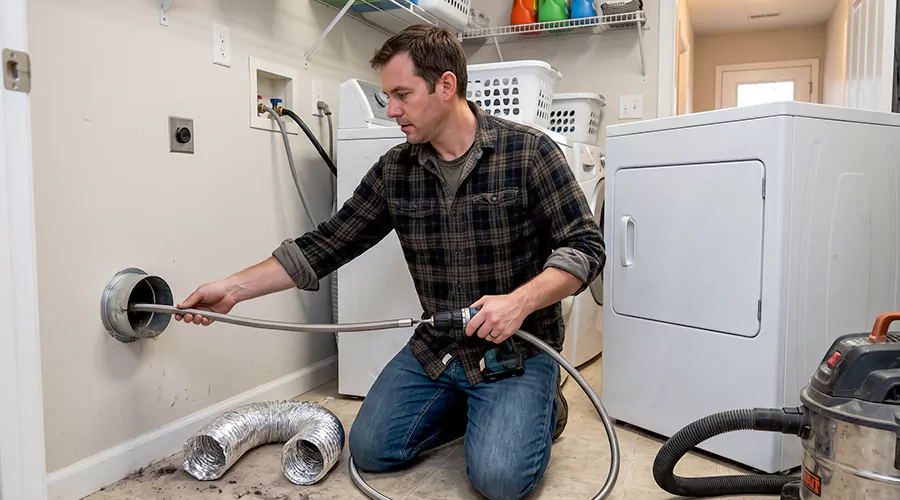
Dryer duct cleaning typically costs $80 to $185 for a standard residential exhaust system in the United States in 2026, with national averages reported around $130 to $145. Cleaning a duct that terminates on the roof generally costs $150 to $250. Longer duct routes and heavy lint blockages may increase the price because they take more time and specialized equipment to clean.
A dryer duct carries warm, moisture-laden exhaust air from the appliance to the outdoors. During normal drying, some fabric fibers escape the lint screen and accumulate inside the duct. The buildup can gradually restrict airflow, causing longer drying cycles and creating conditions that contribute to dryer overheating.
Dryer duct cleaning removes lint from the exhaust passage and helps identify obstructions or damaged connections. Dryer vent hose cleaning also helps remove lint buildup in the flexible hose connecting the dryer to the exhaust duct. The service differs from ordinary HVAC duct cleaning, which focuses on the heating and cooling system. Understanding typical dryer duct cleaning prices helps homeowners determine what they are paying for and when additional work is justified.
What Is the Average Dryer Duct Cleaning Cost in 2026?
The average dryer duct cleaning price falls around $130 to $145 nationally in 2026, depending on the pricing survey. Most standard residential projects cost between $80 and $185. This generally covers an accessible dryer exhaust without major structural damage or unusually complicated cleaning requirements.
Some contractors offer a fixed price for one dryer duct, while others consider the vent's length and configuration before providing a quote. Roof terminations and upper-floor vents typically cost more because they are harder to reach. The amount of lint and condition of the duct can also affect the final invoice.
| Dryer Duct Cleaning Service | Estimated 2026 U.S. Cost |
|---|---|
| Standard residential dryer duct cleaning | 80–185 |
| National average across common estimates | 130–145 |
| Basement or first-floor exhaust | 80–150 |
| Second-floor exhaust | 110–185 |
| Roof dryer duct cleaning | 150–250 |
| Dryer duct inspection | 30–60 |
| Basic DIY cleaning kit | 15–50 |
These figures describe different service categories and should not be automatically added together. A standard cleaning may already include an examination of the outdoor termination. However, repairs to damaged ducting may be billed separately.
The best way to compare prices is to request estimates for the same exhaust route. A quote covering only lint removal near the dryer is different from cleaning the permanent duct and checking its exterior outlet.
Is Dryer Duct Cleaning the Same as Dryer Vent Cleaning?
Dryer duct cleaning and dryer vent cleaning usually refer to the same maintenance service. Both involve removing lint and other debris from the exhaust passage connecting a conventional vented clothes dryer to the outdoors. Contractors may use either term when advertising the work.
Technically, the duct is the enclosed passage carrying exhaust air, while the vent may also refer to its outdoor opening. A complete service should address the relevant duct sections and the termination where debris can accumulate. Cleaning only the exterior hood does not remove material trapped deeper inside.
The distinction becomes more important when comparing dryer cleaning with HVAC air duct cleaning. Heating and cooling ducts circulate conditioned air through rooms, while dryer ducts discharge hot, damp air and combustible lint outdoors. Different equipment and maintenance procedures may be required.
| Service | What It Covers | Typical 2026 Cost |
|---|---|---|
| Dryer duct cleaning | Dryer exhaust passage and applicable connections | 80–185 |
| Dryer vent cleaning | Usually the same dryer exhaust service | 80–185 |
| Roof dryer vent cleaning | Dryer exhaust with rooftop termination | 150–250 |
| Residential HVAC air duct cleaning | Heating and cooling distribution ducts | 271–509 |
| Combined dryer and HVAC duct cleaning | Two different ventilation systems | 340–800 for some packages |
Homeowners should not assume that a general air duct cleaning appointment includes the dryer exhaust. Some companies offer both services, but others clean only the HVAC system. The estimate should identify each service clearly.
What Factors Affect the Cost of Dryer Duct Cleaning?
The price of dryer duct cleaning depends on how easily the technician can access the exhaust and remove accumulated debris. Longer runs and difficult bends can increase labor, while a short straight duct may require less equipment. The condition of the transition duct and exterior termination also matters.
Dryer Duct Length
Longer dryer ducts can require more cleaning time because lint may accumulate across a greater distance. Technicians may need extension rods or specialized equipment to reach sections concealed behind walls or ceilings. The duct's actual route is more important than the straight-line distance between the dryer and the outdoors.
However, many residential services use flat-rate pricing rather than charging for every foot. Some local markets use length-based calculations, particularly for unusually long exhausts. The contractor should explain whether length is included in the base rate or billed separately.
Number of Elbows
Bends and elbows make the exhaust route more difficult to clean because brushes must pass around changes in direction. Lint can collect near these fittings, especially where the duct has sharp turns. Several bends may therefore increase the time required even if the overall duct is relatively short.
The installation's design may also contribute to poor dryer performance. A vent that contains more resistance than the manufacturer permits can remain restrictive after cleaning. The technician should identify obvious design problems instead of recommending repeated cleaning as the only solution.
Location of the Outdoor Termination
A ground-level wall vent is usually easier to clean than a rooftop exhaust. Roof work may require specialized access and fall-protection equipment, which increases labor costs. Second-floor exterior vents can also involve extra access time.
The termination should be checked for lint and a properly moving damper. A clean duct may still discharge poorly when the outdoor hood is obstructed. The quoted service should address the applicable exterior components.
Severity of the Lint Blockage
Normal lint accumulation is generally covered by standard cleaning charges. However, a heavily obstructed duct may require repeated cleaning passes or additional inspection to locate the restriction. Thick deposits near an elbow can be more difficult to remove than lighter material spread along a straight pipe.
A severe blockage should not be forced deeper into the duct. Proper removal and collection are more important than simply creating temporary airflow. The technician may need additional access or specialized equipment when the obstruction is tightly packed.
Condition of the Exhaust Duct
A sound metal duct can generally be cleaned using tools designed for dryer exhaust. Damaged or unsuitable materials require a different response. For example, a severely crushed transition duct may need replacement rather than additional brushing.
Cleaning should not conceal physical defects. A separated joint can release hot, damp air and lint into a wall cavity or laundry room. The repair needs to restore the exhaust path before normal dryer operation resumes.
Local Labor and Service Charges
Labor costs differ between regions and contractors. A company may charge a minimum service fee even when the exhaust is short and accessible. Some estimates include inspection and minor cleaning near the dryer, while others identify those tasks separately.
Comparing at least two quotes can clarify local pricing. Ask which areas will be cleaned and whether there are minimum fees. The scope matters more than a small difference between advertised starting prices.
How Much Does Dryer Duct Cleaning Cost by Location?
Location-based pricing is useful because access conditions often determine how long the service takes. The same amount of lint can require different equipment depending on whether the exhaust terminates through a wall or roof. The following figures represent common U.S. residential cleaning estimates.
First-Floor and Basement Dryer Ducts
Cleaning a first-floor or basement dryer duct commonly costs $80 to $150. These installations often have exterior wall terminations that are relatively easy to access. A short duct may be cleaned from both the appliance connection and outdoor opening without specialized climbing equipment.
However, some basement dryers have longer routes through ceiling cavities. A duct with several elbows or heavy deposits may cost more than a simple first-floor installation. Access and configuration should be considered before expecting the lower end of the range.
Second-Floor Dryer Ducts
Second-floor dryer exhaust cleaning commonly costs $110 to $185. These installations may have longer runs and exterior openings that cannot be reached from the ground. Additional cleaning tools or safe exterior access may be necessary.
The location of the laundry room does not always determine the duct length. A second-floor dryer near an exterior wall can have a relatively direct exhaust. Another may send air through several concealed spaces before reaching the termination.
Roof Dryer Ducts
Roof dryer duct cleaning usually costs $150 to $250. This work may involve a vertical passage and a termination that requires rooftop access. Lint can accumulate around upper bends or the roof damper where household tools may not reach easily.
Cleaning should include attention to the rooftop outlet when it is part of the work scope. Because roof access presents fall hazards and can affect roofing materials, qualified professional service is preferable to household climbing.
How Does Dryer Duct Cleaning Cost Compare With Replacement?
Cleaning is usually less expensive when a dryer duct remains structurally sound. Replacement becomes necessary when the passage is badly crushed or constructed from unsuitable material. The decision should reflect the duct condition rather than assume every clogged vent requires new piping.
| Project | Approximate 2026 U.S. Cost | Typical Reason |
|---|---|---|
| Standard cleaning | 80–185 | Normal accumulated lint |
| Roof exhaust cleaning | 150–250 | Difficult termination access |
| Replace damaged dryer vent section or assembly | 100–300 for many projects | Material cannot be restored |
| New dryer vent installation | 200–800 | New exhaust route or installation |
| Duct rerouting | 200–800 for some projects | Existing path is unsuitable |
These estimates cover different amounts of work and should not automatically be added together. A minor transition duct replacement may be less expensive than a complete new exhaust installation. More complicated rerouting through finished surfaces can cost beyond the typical range.
A properly installed metal dryer exhaust should remain reasonably smooth and unobstructed. Plastic or unsuitable foil-style hoses should not be used as permanent exhaust ducts. Replacement may be more appropriate than repeated cleaning when poor material or routing causes recurring problems.
What Does Professional Dryer Duct Cleaning Include?
A normal professional cleaning should remove lint from the exhaust path and confirm that the dryer can discharge air outdoors. The exact procedure depends on the duct material and access points. A reputable service should explain any part of the system that cannot be reached or cleaned safely.
The cleaning process generally begins with examining the appliance connection and identifying the outdoor termination. The technician may then disconnect an accessible transition duct and remove loose lint. A suitable brush or collection system can be used to clean the permanent metal exhaust.
The service should also evaluate the exterior hood for visible obstruction. After reassembly, the dryer should be checked for normal exhaust airflow. An additional airflow measurement may be available when the installation is complicated or the previous blockage was significant.
A standard cleaning does not necessarily include appliance repairs or replacing damaged exhaust sections. If new parts or more extensive work are needed, those items should appear separately in the estimate.
How Long Does Dryer Duct Cleaning Take?
Many standard residential dryer duct cleanings take approximately 30 to 60 minutes when the exhaust is short and accessible. Longer or more complicated systems may take 60 to 90 minutes. Roof terminations and heavy obstructions can extend the work to approximately two hours or longer.
These are planning estimates rather than guaranteed completion times. A short vent with a severe blockage may require additional attention, while a longer sound duct can sometimes be cleaned efficiently. The technician should not rush or force equipment through an unknown obstruction simply to meet a time target.
| Cleaning Situation | General Time Estimate |
|---|---|
| Short accessible duct with ordinary lint | 30–60 minutes |
| Medium or longer accessible duct | 60–90 minutes |
| Heavy blockage or several difficult bends | Up to 120 minutes or longer |
| Roof termination or complicated concealed duct | Depends on access and inspection findings |
The full service includes more than the time spent brushing. Safe disconnection and reconnection, inspection of the termination and checking the result all contribute to completion. A cleaning is not finished if the duct has been left disconnected or damaged.
What Are the Signs You Need Dryer Duct Cleaning?
Lint buildup can gradually reduce the volume of exhaust air leaving a dryer. The most noticeable result is often an increase in drying time. However, some appliance problems produce similar symptoms, so the vent should be inspected before assuming lint is the only cause.
Common warning signs include:
- Normal laundry loads take longer to dry than before.
- Clothes remain damp after a complete drying cycle.
- The dryer becomes unusually hot while operating.
- A burning smell develops during use.
- The exterior exhaust flap does not open normally.
- Lint accumulates around the outdoor vent.
- The transition duct behind the dryer is crushed.
- Warm, damp air builds up in the laundry room.
- The dryer stops unexpectedly because of possible overheating.
- The vent has not been cleaned for an extended period.
A burning smell or evidence of overheating requires immediate attention. Stop using the dryer until the cause has been evaluated. If smoke or fire is present, evacuate and contact emergency services.
Even when the dryer appears to function normally, periodic maintenance remains useful. The lint screen cannot capture every fiber entering the exhaust. Deposits may accumulate long before a complete blockage develops.
How Often Should Dryer Ducts Be Cleaned?
Cleaning a dryer duct approximately once a year is a reasonable maintenance interval for many residential installations. Heavily used dryers and long exhaust routes may require more frequent inspection. The actual schedule should also consider whether lint has previously accumulated quickly.
The U.S. Fire Administration advises homeowners to clean lint from the dryer filter before or after each use and inspect the exhaust system for damage or restrictions. Keeping the filter clean reduces debris entering the duct, but it does not replace full exhaust cleaning.
| Maintenance Task | Suggested Frequency |
|---|---|
| Remove lint from dryer screen | Every load |
| Inspect accessible transition duct | Periodically |
| Check outdoor exhaust flap | Periodically |
| Clean complete dryer exhaust duct | Approximately annually |
| Investigate slow drying or overheating | As soon as symptoms appear |
| Repair damaged exhaust materials | Before continued normal use |
An annual schedule is a starting point rather than permission to operate a clogged dryer until the next appointment. If drying times suddenly increase, the exhaust deserves inspection regardless of when it was last cleaned.
Can You Clean a Dryer Duct Yourself?
A short, safely accessible metal dryer duct may be suitable for cleaning with a dryer-specific brush and vacuum. The appliance should be turned off and disconnected from electrical power before the exhaust connection is opened. Tools must be compatible with the duct material to avoid damage.
Household cleaning becomes more difficult when the exhaust runs through concealed ceilings or terminates on the roof. Long extension brushes may become stuck around bends, and incomplete cleaning can leave lint at the far end of the passage. These situations often justify professional service.
Gas dryers require special care because moving the appliance can strain the fuel connection. Do not disconnect or disturb the gas line merely to reach the exhaust. When safe access is not available, a qualified technician should perform the work.
Avoid compressed-air or leaf-blower improvisations when the duct condition is unknown. Moving lint through an obstructed passage can place stress on weak joints or push debris into concealed spaces. Physical lint removal and controlled collection are more reliable.
Is Dryer Duct Cleaning Worth the Money?
Dryer duct cleaning is worthwhile when lint buildup has restricted exhaust airflow or routine maintenance is due. Removing the deposits helps warm, moisture-laden air leave the appliance as intended. When a restriction caused long drying cycles, cleaning may improve performance and reduce unnecessary energy use.
The safety benefit is also important. Lint is combustible, and failure to clean is a leading contributing factor in residential dryer fires. Cleaning reduces one avoidable hazard, although proper appliance installation and electrical maintenance are also necessary.
The value depends on completing the actual work. Paying for a technician to remove a small amount of lint near the filter while leaving the permanent exhaust obstructed provides limited benefit. A complete service should address the path where the restriction exists.
How Can You Avoid Paying Too Much for Dryer Duct Cleaning?
Comparing estimates is easier when each contractor describes the same cleaning scope. A low advertised starting price may exclude difficult duct routes or exterior access. Asking clear questions before booking helps reveal those differences.
Before approving a quote, confirm the following:
- Does the price include the complete dryer exhaust duct?
- Will the accessible transition duct be inspected and cleaned?
- Is the exterior termination included?
- Are second-floor or roof-access charges extra?
- What happens if a heavy blockage is found?
- Does the service include checking the exhaust after cleaning?
- Are damaged components quoted separately?
- Is the price fixed or subject to additional labor charges?
The answers help distinguish routine cleaning from repair or replacement work. An inspection may identify a damaged vent, but the contractor should explain why replacement is necessary before performing it. Homeowners should also avoid paying for unrelated chemical treatments marketed as substitutes for removing lint.
When Should You Call a Professional Dryer Duct Cleaner?
Professional service is appropriate when the exhaust contains a major obstruction or cannot be reached safely with household equipment. Long concealed ducts and roof terminations are common examples. A technician can select cleaning tools suited to the installation and inspect areas that are otherwise difficult to access.
A professional should also evaluate repeated clogs because they may indicate an unsuitable exhaust route. Excessive bends or damaged duct sections can continue restricting airflow even after lint has been removed. Correcting the physical defect may be more effective than increasing cleaning frequency.
If the dryer continues overheating or producing unusual odors after the duct has been cleaned, appliance repair may be necessary. Cleaning the exhaust does not resolve every mechanical or electrical problem inside the dryer.
How Can You Keep Dryer Duct Cleaning Costs Down?
Regular maintenance helps prevent minor lint deposits from developing into substantial obstructions. A clean lint filter reduces the amount of fiber entering the exhaust, while a sound transition duct maintains airflow. These actions can also make scheduled professional cleaning less complicated.
Check that the dryer is not pushed against and crushing its exhaust connection. Keep the outdoor damper free from visible debris and make sure it opens during operation. Do not install mesh screening across the outlet because it can collect lint.
Plan cleaning before severe symptoms appear. A routine appointment for a sound accessible vent may cost less than a visit involving extensive obstruction removal or replacement of damaged materials. Record service dates and any recurring problems so the installation can be evaluated when necessary.
Conclusion
Dryer duct cleaning typically costs $80 to $185 for standard residential service in 2026, with national averages around $130 to $145. Roof terminations and long complicated routes generally cost more. The service should remove lint from the exhaust passage and check for conditions that restrict airflow. Replacement costs are separate when the duct is physically damaged. Before scheduling, identify your exhaust location and request a quote covering the complete duct rather than only the visible outlet.